
No date set, but here is our wedding already: four prompts
One couple photo and you get wedding shots that look like a guest took them from their seat: straightening a bow tie, cutting the cake, cracking up at the same moment, and the near-trip.
- Model
- YouViCo AI generation · New file ▸ AI, output type Image
- Difficulty
- Beginner
- Time
- 10 min, plus a minute or two per image
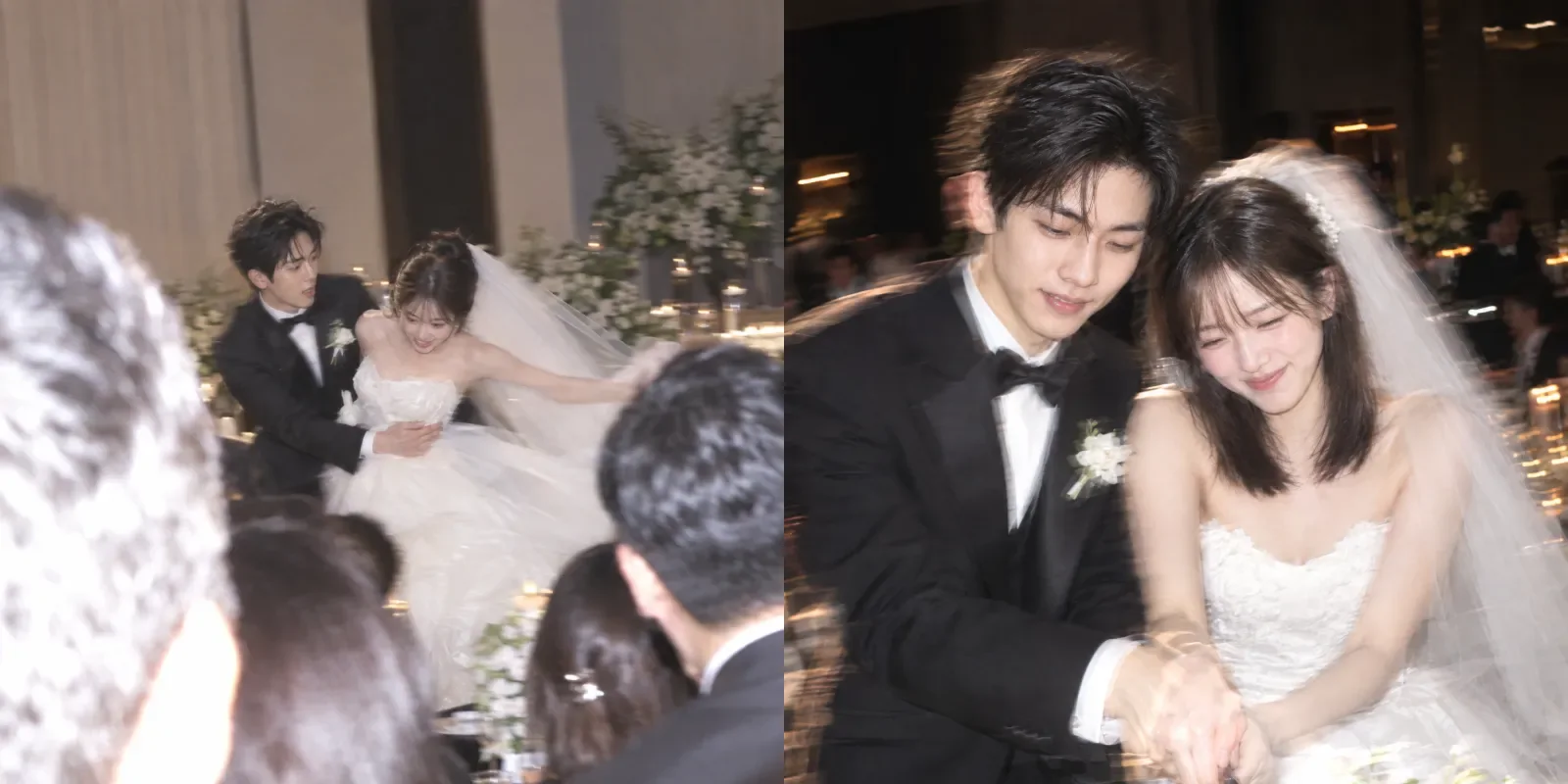
Before and after
Four cuts from one couple photo. Keep the photo, change only the prompt, and the moment changes.
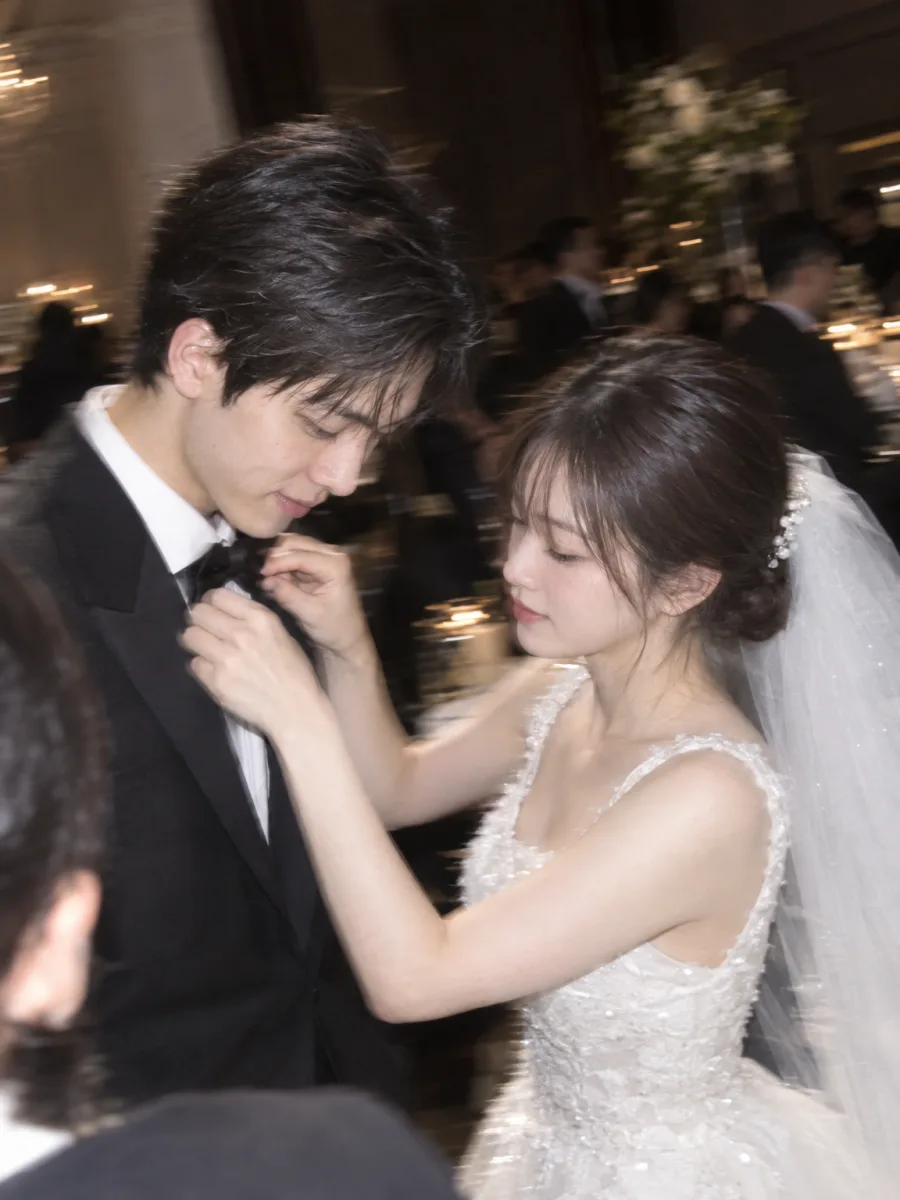
Result Cut 1. Straightening the bow tie
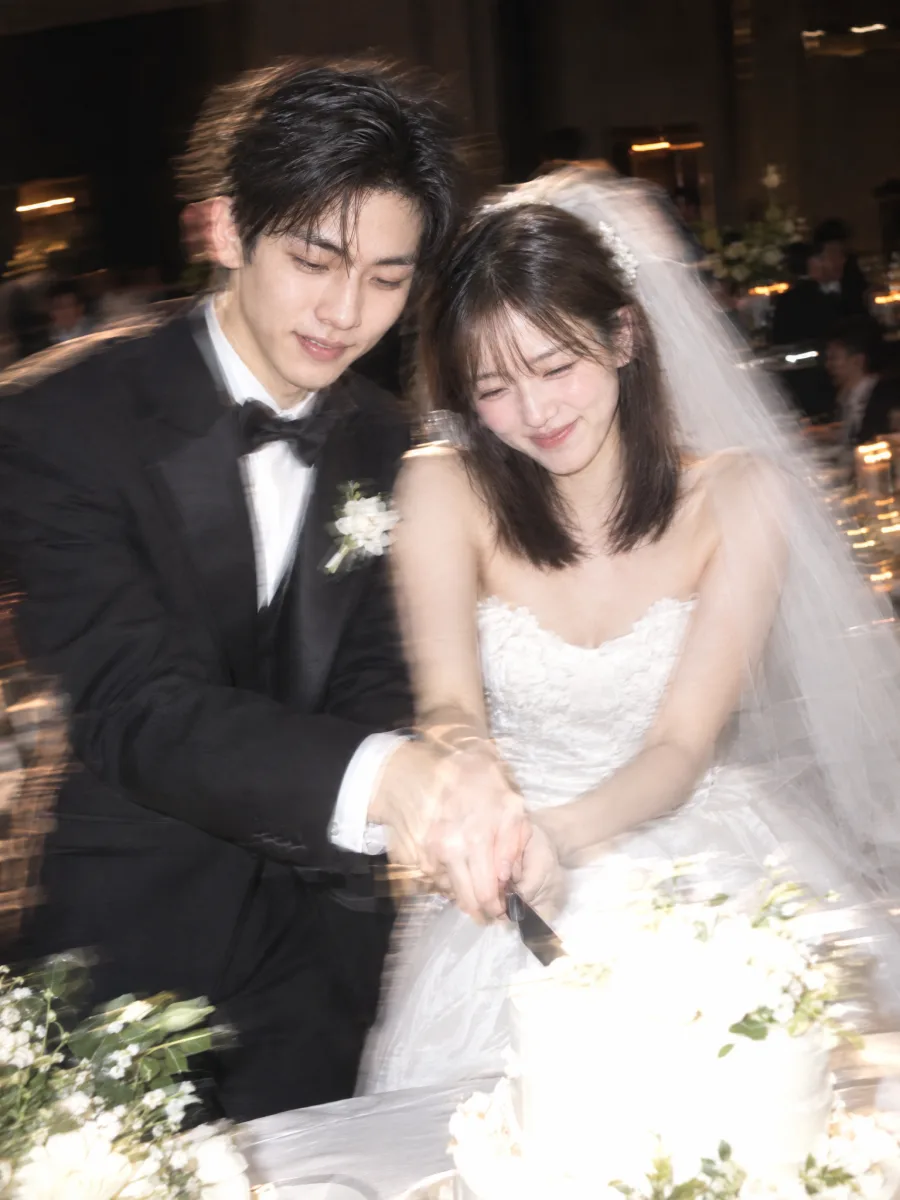
Result Cut 2. Cutting the cake
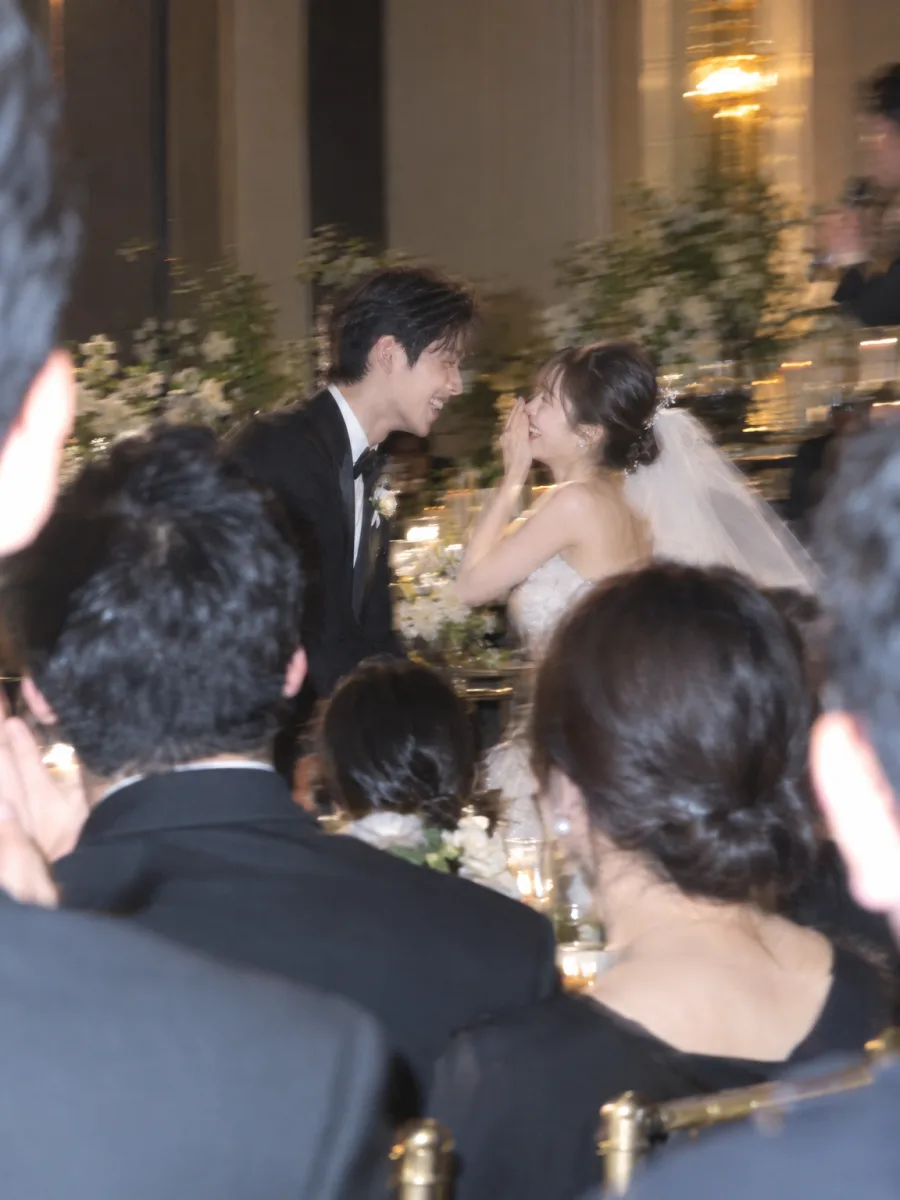
Result Cut 3. Cracking up at the same moment
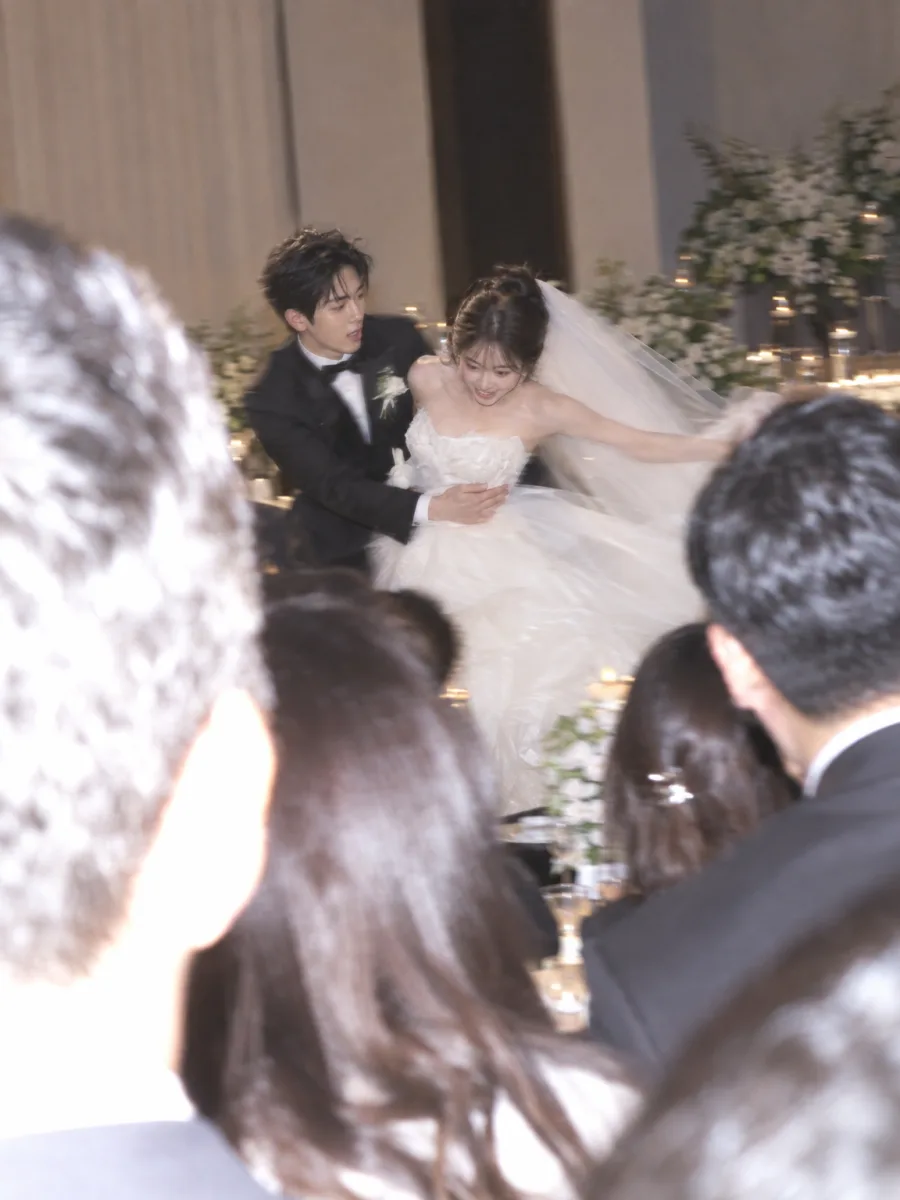
Result Cut 4. The near-trip
What you need
Prepare these before you start. Slot names map to the placeholders in the prompt.
One photo of the two of you
photoFace shape, eyes, and skin tone should be clear for both people. A selfie or a travel photo works; the original clothing, pose, background, and framing are not carried over.
No date set, and the wedding photos are already here.
Not the polished ones the photographer delivers either. These look like they were taken from a seat a few rows back, past the back of somebody’s head: the groom catching the bride as she nearly trips, the two of them laughing at each other in a frame that came out shaky. Feed in one photo of the two of you and change only the prompt. All four prompts are below, as they are.
What we are making
Wedding photos that look like a guest took them rather than a photographer. The heads of the row in front intrude on the frame, the focus lands slightly off, and because someone is moving there is a smear of motion. That clumsiness is exactly what makes them read as real.
Four things hold all four prompts together: neither person looks at the camera, an on-camera flash fires from the front, the camera shakes enough to leave a smear, and the photographer is a guest sitting far away. Those four make the wedding-snapshot feel.
The prompts take only appearance from the original photo: face shape, the impression of the eyes, nose, and mouth, skin tone, hair color. Clothing, pose, venue, and lighting are set by the prompt.
The three steps, every time
Step 1. Upload one photo of the two of you
Upload a photo with both of you in it to a YouViCo project. Large, sharp faces are enough.
Step 2. Choose Image in New file ▸ AI
Click New file, then the AI tab. Set the output type to Image, pick a model from the list, and add the photo you just uploaded as a reference file.
Step 3. Paste the prompt for the cut you want
Paste one of the four prompts below and click Create file. Keep the same photo and swap only the prompt to get the same faces in a different scene. Generate two or three per cut and choose.
Cut 1. Straightening the bow tie
A private moment that opened up briefly during the event. The bride fixes the groom’s crooked bow tie while he lowers his head, trying not to make it obvious. The point is the lived-in intimacy of someone fixing your clothes, not a romantic meeting of eyes.
[Using the uploaded photo]
Use the uploaded couple photo only as a person reference for the two people's appearance and identity.
So that the two people in the uploaded photo are recognizable as the same couple in the final image, keep each person's distinctive features naturally intact: face shape, the impression of the eyes, nose, and mouth, skin tone, hair color, and overall air.
Do not, however, reproduce the uploaded photo's clothing, pose, hand gestures, expressions, camera angle, composition, location, background, lighting, or shooting situation.
Whatever form the original photo takes, whether a selfie, an everyday photo, a travel photo, a frontal shot, or a full-body shot, use only the two people's appearance as reference and rebuild the scene as a completely new wedding situation.
Keep the woman naturally identical to the woman in the uploaded photo but turn her into the bride, and keep the man naturally identical to the man in the uploaded photo but turn him into the groom.
The bride wears a white wedding dress and veil. The fringe and the hair around her face may reflect the uploaded woman's features naturally, but the back of her hair must be a clean bun-style wedding updo.
The groom wears a black tuxedo or a classic, formal black suit.

[Scene]
Render it as a photo a guest or a snapshot photographer caught by chance: at the reception or inside the wedding hall, while everyone else is looking elsewhere, the bride quietly straightens the groom's bow tie or necktie.
The two are not in the main photo session or any official shoot; this is closer to a private moment that opened up briefly during the event.
The bride has stepped in a little closer and is quietly fixing his crooked bow tie, necktie, or shirt collar with one or both hands.
The groom leans slightly toward her or lowers his head, as if trying not to make it obvious to the people around them.
The feeling between them should read strongly as "a quick bit of looking after each other, thinking nobody is watching."

[Gaze and expression]
Important: neither of them ever looks at the camera.
The bride is looking only at his bow tie or at her own fingertips, and the groom is looking down at her face or her hands.
Both should look unaware that they are being photographed.
The bride's mouth turns up very slightly or she wears a look of concentration, and the groom may smile sheepishly or look like he is holding back a laugh.
What matters is the lived-in intimacy of a partner fixing your clothes, not an overly romantic staged moment of meeting eyes.

[Camera feel]
Render the photo as though a guest or snapshot photographer spotted them from a little distance and raised the camera in a hurry.
An observing angle slightly to the side or diagonal is better than a perfectly frontal composition.
The camera must be shaking noticeably, with strong handheld motion blur and directional smearing visible on the contours of their faces, their hands, the veil, the edge of the dress, and the silhouette of the tuxedo.
At the same time it is the instant an on-camera flash fired hard, from the front or slightly off-axis.
Only the bride and groom, hit by the flash, pop bright, while the wedding hall behind them stays relatively dark.
The composition does not have to be perfect, and part of another guest's shoulder or head may cross into one side of the frame.

[Final mood]
This image must look not like a wedding editorial, but like a photo grabbed in a hurry by a guest standing far away who happened to spot them quietly fixing each other's clothes.
Emphasize overall: the sense of quietly looking after each other, a private moment, behavior unaware of the camera, hard flash, shake, a slight observer's viewpoint, and the feel of being at a real wedding.
Do not use dreamy haze, soft filters, perfectly posed wedding editorials, smiles aimed at the camera, or a static studio feel.

Portrait 4:3.
Cut 2. Cutting the cake
The two of them holding the knife together. The point of this one is not a beaming editorial smile but the slightly scrunched laugh of someone trying to hold it in.
Render the moment the groom and bride cut the wedding cake together at the reception or in the wedding hall as a photo a guest or snapshot photographer grabbed in a hurry with a mirrorless camera.
The composition is vertical, and the bride, the groom, and the wedding cake on the table in front of them all sit naturally within one frame.
The bride wears a white wedding dress and veil; the groom wears a black tuxedo or a formal suit.
The two are holding the cake knife together in the act of cutting.

Important: neither of them looks at the camera.
Their gaze is on the cake, on the hands holding the knife, or toward each other's movement.
It must not feel like posing straight into the lens; the gaze should read as a real moment caught in passing.
Rather than the beaming expression of a wedding editorial, a slightly scrunched laugh or a natural smile as if holding back a giggle is fine too.
It should carry the real, slightly awkward but lovable reaction of laughing in the instant of cutting the cake.

The photo must be in a state where the camera shook quite a lot.
Strong handheld motion blur and directional shake are visible, and the smear of the actual shutter moment should be felt on faces, hands, the edge of the dress, the tuxedo silhouette, and around the cake.
At the same time it is the instant an on-camera flash fired hard from the front.
The couple, the white dress, their hands, and the cake brighten sharply under the direct flash, and the highlights may blow out slightly.
The background is relatively darker, for the look of a wedding-day snapshot in which only the flash-lit subject pops.

This image must look not like the polish of a wedding editorial, but like a wedding snapshot that came out shaky because it was taken in a hurry so as not to miss an important moment, and is alive with the feel of being there.
Refer to the mood of the uploaded photo, but there is no need to reproduce its composition or poses exactly.
It may look like a more natural, more spontaneous moment from the actual ceremony.

Emphasize overall: strong camera shake, clear motion blur, hard direct flash, natural gaze, the moment of looking at the cake, a slightly scrunched laugh, and the vivid feel of a wedding-day snapshot.
Do not use dreamy haze, soft filters, an excessively pretty wedding-editorial feel, or static studio staging.

Portrait 4:3.
Cut 3. Cracking up at the same moment
Peeked at through a gap between heads, several rows back in the guest seats. The couple are visible almost entirely in profile, postures coming undone with laughter. The instruction not to turn toward the camera for a frontal face is what makes this cut.
[Using the uploaded photo]
Use the uploaded couple photo only as a person reference for the two people's appearance and identity.
So that the two people in the uploaded photo are recognizable as the same couple in the final image, keep each person's distinctive features naturally intact: face shape, the impression of the eyes, nose, and mouth, skin tone, hair color, and overall air.
Do not, however, reproduce the uploaded photo's clothing, pose, hand gestures, expressions, camera angle, composition, location, background, lighting, or shooting situation.
Whatever form the original photo takes, use only the two people's appearance as reference and rebuild the scene as a new wedding situation.
The bride wears a white wedding dress and veil, and the back of her hair must be a clean bun-style wedding updo.
The groom wears a black tuxedo or a classic, formal black suit.

[Scene]
Render the moment the groom and bride burst out laughing at the same time, at the reception or in the wedding hall, as a photo someone far away among a crowd of guests grabbed in a hurry with a mirrorless camera.
The camera is not right in front of the couple but several rows back among the guest seats.
At the front of the frame, the backs of heads, shoulders, hair, and suit silhouettes of seated or standing guests must cross in, some of them large.
The couple appear small at the center of the frame or slightly to one side, quite far from the camera.

[Angle]
Show the groom and bride almost fully in profile, or in three-quarter profile.
Do not force their bodies toward the camera in order to show their faces frontally.
The two of them tilting their heads toward each other or bending slightly as they laugh must read clearly as a side silhouette.
The camera is shooting them as if peeking through a gap between guests.

[Expression and movement]
The two have both burst out laughing at once, because of something the host said, a mistake one of them made, or a joke from a guest.
This scene may be rendered somewhat exaggerated.
The bride may tip her head back slightly or cover her mouth with a hand as she laughs hard, and the groom may bend forward or lean toward her as he laughs.
The veil or dress may shift a little with the laughing, and the lines of their bodies may sway more than usual.
It must not collapse into comic slapstick, though; it should be the lovable look of a posture briefly coming undone because something was too funny.
Important: neither of them ever looks at the camera.

[Camera feel]
The photo must look like a wedding snapshot zoomed in from far away and taken in a hurry.
The guests in front may fall partly out of focus or be partly lit by the flash.
The couple, being far away, must carry a sense of distance and compressed perspective.
Across the whole photo there is strong handheld shake and directional motion blur, with smearing especially around the contours of their faces, moving hands, the veil, the dress, and the tuxedo.
At the same time it is the instant an on-camera flash fired hard, and the distant couple and the nearby guests' shoulders and heads catch the light differently, for a realistic flash photograph.
The frame is not perfectly tidy, and the view may be partly blocked, as if the lens were shoved in quickly between people.

[Final mood]
This image must look not like a wedding editorial, but like a photo taken in a hurry through a gap between people's heads, by someone far off among the guests who happened to notice the couple crack up at the same moment.
Emphasize overall: the distance of being shot from far away, a foreground of guests' heads and shoulders, near-complete profiles, exaggerated laughing movement, hard flash, clear motion blur, and the vivid, unruly feel of a real wedding.
Do not use dreamy haze, soft filters, a frontal wedding editorial, perfect posing, or a static studio-like mood.

Portrait 4:3.
Cut 4. The near-trip
The bride steps on the hem of her dress, lurches, and the groom catches her fast. This cut has the most movement of the four, so it keeps the most smear.
[Using the uploaded photo]
Use the uploaded couple photo only as a person reference for the two people's appearance and identity.
So that the two people in the uploaded photo are recognizable as the same couple in the final image, keep each person's distinctive features naturally intact: face shape, the impression of the eyes, nose, and mouth, skin tone, hair color, and overall air.
Do not, however, reproduce the uploaded photo's clothing, pose, hand gestures, expressions, camera angle, composition, location, background, lighting, or shooting situation.
Whatever form the original photo takes, use only the two people's appearance as reference and rebuild the scene as a new wedding situation.
The bride wears a white wedding dress and veil, and the back of her hair must be a clean bun-style wedding updo.
The groom wears a black tuxedo or a classic, formal black suit.

[Scene]
Render the moment the bride steps on the hem of her dress, suddenly lurches badly, and the groom startles and catches her fast, at the reception or in the wedding hall, as a photo someone far away among the guests grabbed in a hurry with a mirrorless camera.
The camera is not right in front of the couple but several rows back among the guest seats, or in among the crowd.
At the front of the frame, guests' heads, shoulders, suits, and hair must naturally block part of the view.
The couple appear a little small at the center of the frame or to one side, and must feel genuinely far away.

[Action]
While walking or changing direction, the bride steps lightly on the hem of her wedding dress and loses her balance more than expected, lurching to one side.
This scene may be rendered with movement slightly exaggerated beyond reality.
Her upper body tips hard to one side, one arm may fly out instinctively, and the veil and dress may swing sharply for an instant.
Startled, the groom reflexively grabs her waist, arm, or side in a hurry.
He too must have moved sharply in the instant, leaning toward her.
This is not, however, a scene in which the bride actually falls to the floor or is hurt.
It must be "the moment she almost went down and was caught right away."

[Gaze and expression]
Neither of them ever looks at the camera.
The bride looks at her own feet or at the groom, eyes wide with surprise or on the verge of bursting into laughter.
The groom looks at her with a startled expression, and once he has hold of her a little laughter may mix in.
Expressions and body movement may be slightly more exaggerated than in an ordinary wedding editorial.
As she lurches, surprise and laughter arrive at once, and the groom should feel as if he reacted in a hurry with a sharp "whoa!"

[Camera feel]
The photo must look like a scene zoomed in and taken in a hurry from among distant guests.
The heads and shoulders of the guests in front cross large into the frame, and some must be out of focus and blurred.
The couple are visible through the gap between those people.
Because this is a scene with large movement, make active use of strong handheld shake and directional motion blur.
Strong movement smear must be visible especially around the bride's veil, the hem of her dress, her outstretched arm, and the groom's hands and upper body.
At the same time it is the instant an on-camera flash fired hard.
Parts of nearby guests' heads or shoulders blow out bright under the flash, and the distant couple are momentarily revealed bright as well.
As if the photographer jerked the camera in surprise at something that happened suddenly, the frame may tilt slightly and the couple need not sit perfectly at the center.

[Final mood]
This image must look not like a staged wedding editorial, but like the moment someone watching the wedding from far off among the guests noticed the bride suddenly lurch and raised the camera in a hurry, shooting through a gap between people's heads.
It shakes, the view is partly blocked, and the composition is not perfect, and because of that it must carry a strong sense of a sweet mishap that happened suddenly at a real wedding.
Emphasize overall: the distance of being shot from far away, a foreground of guests' heads and shoulders blocking the view, the bride's exaggerated lurch, the groom's hurried reaction, a sharply swinging veil and dress, hard direct flash, strong motion blur, and the instant of laughter and surprise.
Do not use dreamy haze, soft filters, a movie-perfect catch pose, a static scene of the groom holding the bride still in his arms, or a perfect wedding editorial.

Portrait 4:3.
Tips before you run it
- Leave those four instructions alone. No eye contact with the camera, direct flash, handheld shake, and a distant guest’s viewpoint. Drop any one of them and you are back to an ordinary wedding editorial.
- Cut 2 has no identity paragraph. If faces drift in the cake shot, paste the bracketed “using the uploaded photo” paragraph from cut 1 at the top of it.
- Generate two or three, then choose. How much of the guests’ heads intrude and how much motion smears differ every run.
- The clumsy frame is the point. Prefer the result where focus slips a little and someone blocks part of the view over the tidy one.
- To change the updo, edit only the bun sentence in the prompt and leave the other paragraphs alone.
- Use photos of yourselves. Both people should have agreed to it; do not put in celebrities or strangers.
Frequently asked questions
Does a selfie of just one person work?
All four cuts are scenes with two people, so a photo of both of you works better. With only one person’s photo, the prompt invents the other.
The faces do not look like us.
The smaller the faces in the source, the less identity they carry. Swap in a photo where both faces are large and well lit, then regenerate.
There is too much blur.
Change “strong handheld motion blur” to “slight handheld motion blur” and the smear drops. Keep in mind that the shake is what gives these cuts their on-the-spot feel.
Can I change the dress or the venue?
Edit the sentences that describe the dress and the location. Leave the paragraphs about composition and lighting alone; they are what make it look like a guest’s photo.
Make your own version
Open your project in YouViCo, attach the references, paste the prompt, and share what you make.